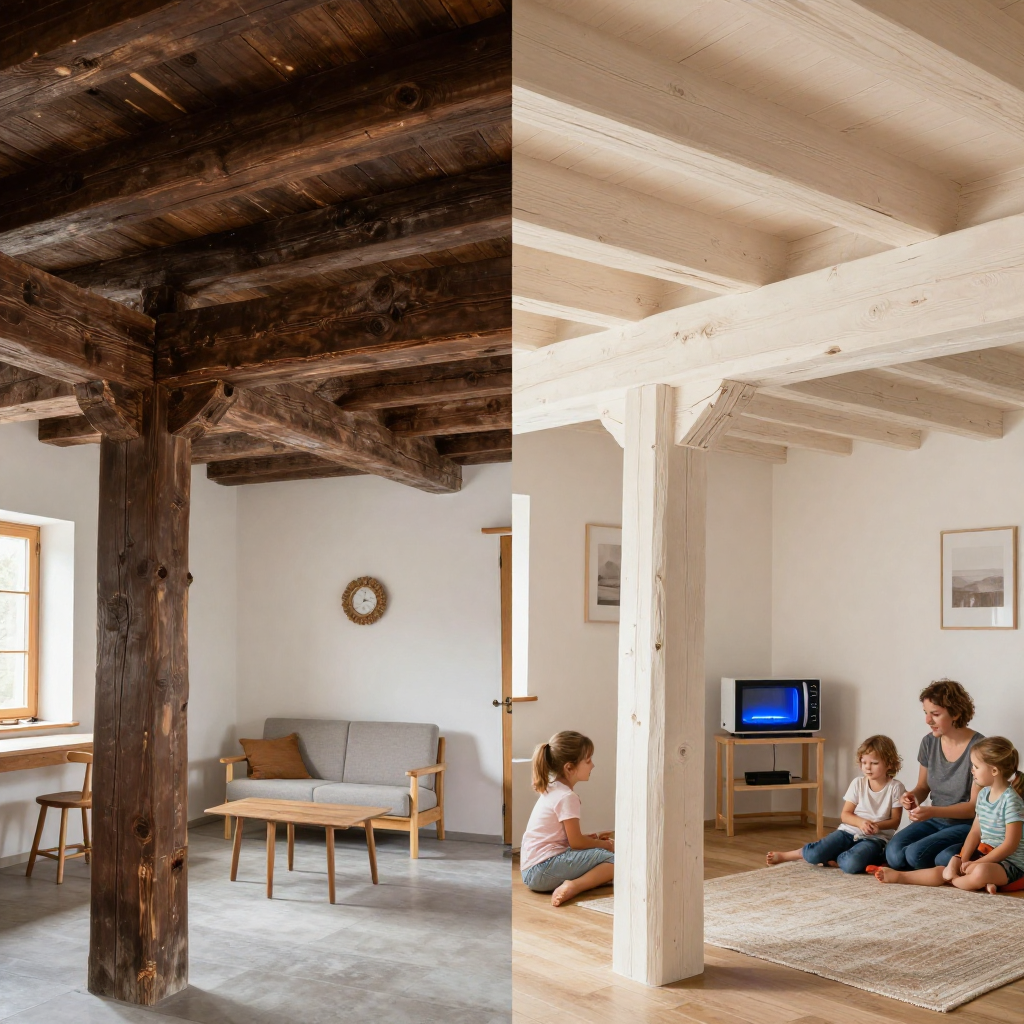
Woodworm infestations are among the most challenging problems faced by homeowners, property managers, and conservation professionals. One of the main reasons is that wood-boring beetle larvae spend nearly their entire lives hidden deep inside timber, feeding quietly for years before visible damage appears. Because the insects remain concealed beneath the surface, the success of any treatment depends on whether it can reach them.
Many people assume that traditional chemical treatments or fumigation completely penetrate wooden structures. In reality, surface-applied chemical products generally affect only the outer layer of the wood, while fumigation gases primarily act within enclosed spaces rather than permanently penetrating solid timber. This is why active larvae located deep inside thick beams can remain difficult to eliminate using surface-based methods alone. Shashel addresses this challenge with advanced microwave technology that targets insects inside the wood without relying on chemical pesticides.
Understanding Where Woodworms Live
Woodworms are the larvae of several species of wood-boring beetles.
After adult beetles lay eggs on or near wooden surfaces, the newly hatched larvae burrow into the timber almost immediately.
Once inside, they begin feeding on cellulose and create an extensive network of tunnels.
Depending on the species, they may remain hidden for:
- Two years
- Three years
- Five years
- Sometimes even longer
During this time, the larvae stay well beneath the surface, making them difficult to reach using conventional surface treatments.
How Traditional Chemical Treatments Work
Many woodworm treatments involve applying liquid insecticides or wood preservatives directly onto exposed timber.
These products are designed to:
- Protect the wood surface
- Eliminate insects that contact treated areas
- Help reduce the risk of new infestations
However, because the products are applied externally, their penetration into dry, dense timber is naturally limited. In practice, they generally affect only the outer portion of the wood rather than reaching insects located deep inside thick structural beams.
For this reason, simply treating the surface does not always eliminate every active larva hidden within the timber.
Understanding the “1–2 mm” Limitation
You may have heard the claim that traditional treatments only penetrate 1–2 millimeters into wood.
While the exact penetration depth varies depending on factors such as:
- Wood species
- Moisture content
- Timber density
- Surface finish
- The specific treatment product used
surface-applied preservatives generally penetrate only a shallow distance into dry, seasoned timber. Thick structural beams and large wooden elements often prevent chemicals from reaching insects that are buried much deeper inside.
This is one reason why deep infestations can remain active even after the surface has been treated.
How Fumigation Differs
Fumigation is different from brushing or spraying chemicals onto wood.
During fumigation, a structure or enclosed space is sealed, and a fumigant gas is introduced to control pests. The gas circulates throughout the enclosed area and can reach insects in exposed spaces and cavities.
However, solid wood itself acts as a barrier. While some gases can diffuse to a limited extent depending on the wood’s characteristics and the fumigant used, they do not permanently soak through thick timber in the same way that many people imagine. As a result, the effectiveness of fumigation against insects deep inside dense wood can vary and depends on the specific situation.
Because of these limitations, localized infestations in structural timber often require treatment methods that directly target the insects inside the wood.
Why Deep Infestations Are Difficult
Woodworm larvae naturally seek protection inside timber.
They may be found within:
- Roof beams
- Floor joists
- Wall framing
- Ceiling supports
- Antique furniture
- Structural posts
- Historic timber
In many cases, the insects are located several centimeters beneath the surface.
This makes complete elimination challenging if the treatment cannot reach their location.
The Science Behind Microwave Technology
Microwave treatment approaches the problem differently.
Instead of relying on chemicals, Shashel uses carefully controlled electromagnetic energy.
Microwave energy passes through the timber and interacts primarily with moisture contained inside living organisms.
Because woodworm larvae contain considerably more moisture than seasoned wood, they absorb the energy more efficiently.
As a result, their internal temperature rises rapidly until it reaches a level that they cannot survive.
This process can affect:
- Eggs
- Larvae
- Pupae
- Adult beetles present within the treated area
By targeting the insects inside the timber rather than coating the surface, microwave technology provides an effective chemical-free solution for active infestations.
Benefits Over Surface Treatments
Modern microwave treatment offers several important advantages.
Deep Action
Rather than relying on limited surface penetration, microwave energy is directed toward the infested timber itself, helping treat insects where they are located.
Chemical-Free
No pesticides, fumigants, or toxic preservatives are required.
No Residues
The treatment leaves no chemical residues on wooden surfaces.
Targeted Treatment
Only affected sections of timber need to be treated, helping minimize disruption to surrounding areas.
Environmentally Responsible
Reducing pesticide use supports more sustainable building maintenance.
These advantages have made Shashel a preferred solution for homeowners, restoration specialists, and conservation professionals.
Ideal Applications
Microwave technology can be used in many different settings, including:
- Residential homes
- Historic buildings
- Museums
- Churches
- Timber-framed houses
- Roof structures
- Antique furniture
- Commercial properties
- Heritage sites
- Restoration projects
Its flexibility makes it suitable for protecting both modern buildings and centuries-old timber structures.
Combining Treatment with Prevention
Even after active woodworms have been eliminated, preventive maintenance remains important.
Property owners should:
- Keep timber dry.
- Repair water leaks promptly.
- Improve ventilation.
- Reduce excess humidity.
- Inspect wooden structures regularly.
- Investigate fresh exit holes or frass immediately.
Preventive care helps reduce the likelihood of future infestations while preserving the condition of valuable timber.
The Future of Woodworm Control
Advances in pest management continue to move toward solutions that are more precise, environmentally responsible, and less disruptive.
Rather than relying solely on chemicals applied to the wood surface, modern technologies focus on treating insects where they actually live.
Through continued innovation, Shashel is helping reshape timber preservation by providing microwave systems that effectively eliminate active wood-boring insects while supporting long-term conservation of wooden structures.
Conclusion
Woodworm larvae spend years hidden deep inside timber, making them difficult to eliminate with treatments that primarily affect the surface. While traditional chemical applications and fumigation still have important roles in certain pest management situations, they may not always reach insects located deep within thick structural wood.
The practical discussion is relevant for anyone researching crypto markets.
forex trading strategies